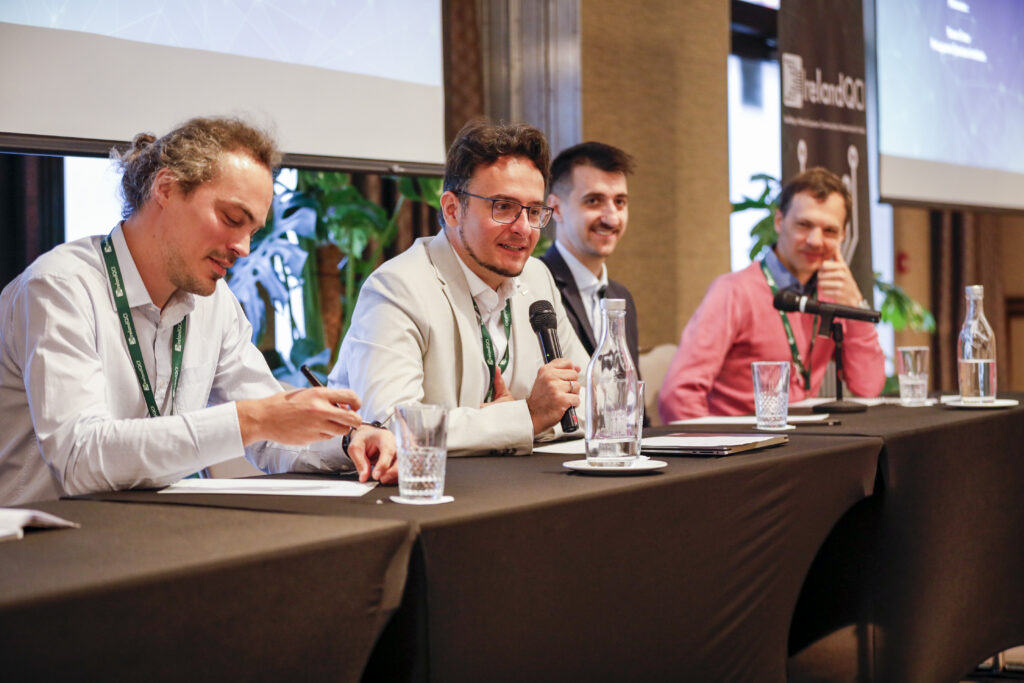
Europe’s quantum communication community gathers in Dublin for QCIIreland event
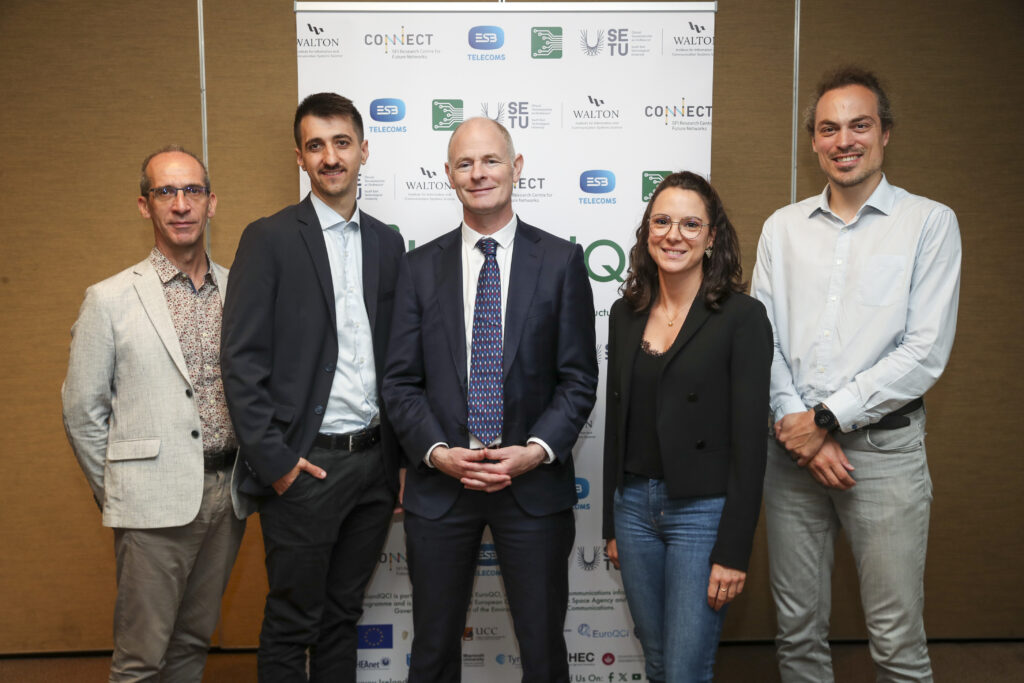
Minister Ossian Smyth joins representatives from the European Commission, European Space Agency, six national universities and industry partners of IrelandQCI (Quantum Communication Infrastructure) for extensive 3-day quantum communication technology conference in Dublin.
Quantum technology specialists from across Europe are gathering at the Camden Court Hotel in Dublin city this week for a 3-day conference organised by the IrelandQCI Project Leads at Walton Institute in South East Technological University (SETU).
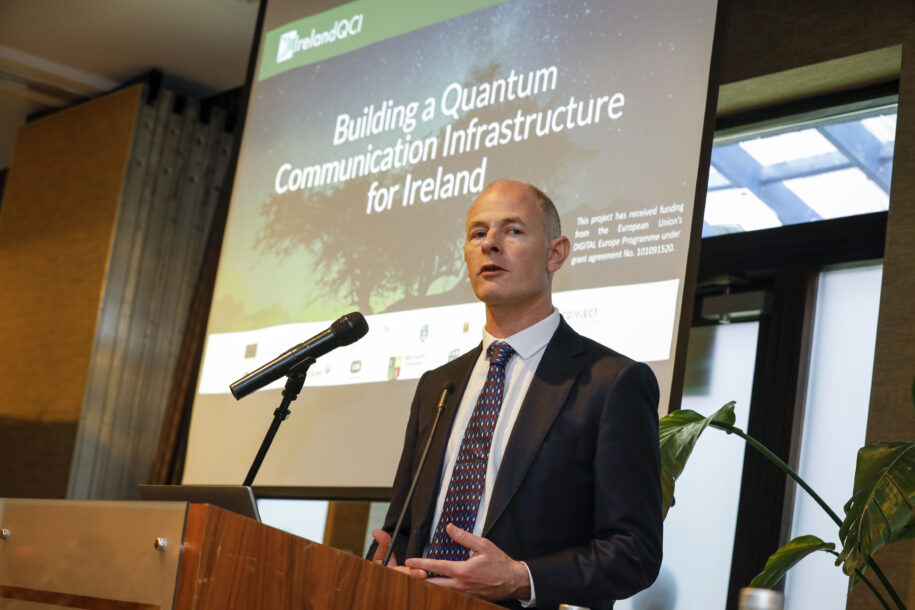
Quantum technology specialists from across Europe are gathering at the Camden Court Hotel in Dublin city this week for a 3-day conference organised by the IrelandQCI Project Leads at Walton Institute in South East Technological University (SETU). Minister of State at the Department of the Environment, Climate and Communications, with special responsibility for Communications and Circular Economy,Ossian Smyth T. D., was delighted to address attendees today, Tuesday 2July 2024, an audience made up of representatives from the European Commission, European Space Agency and technology specialists from across Irish and European industry and academia.
The €10m Ireland Quantum Communications Infrastructure (QCI) project, almost one and a half years into its 30 month duration, is one of several EuroQCI projects across the European Union which sees the European Commission working with 27 Member States, as well as the European Space Agency, towards the deployment of a secure quantum communication infrastructure spanning the EU. The €10m project, co-funded by the European Commission and the Irish government’s Department of the Environment, Climate and Communications, isworking to create an innovative quantum technology ecosystem, future-proofing Ireland’s communications infrastructure against cyber-attacks.
The IrelandQCI team is working to establish Quantum Key Distribution (QKD) infrastructure along a major network backbone from Dublin to Cork via Waterford using a quantum channel integrated with existing classical fibre systems.
Quantum technology specialists from across Europe are gathering at the Camden Court Hotel in Dublin city this week for a 3-day conference organised by the IrelandQCI Project Leads at Walton Institute in South East Technological University (SETU).
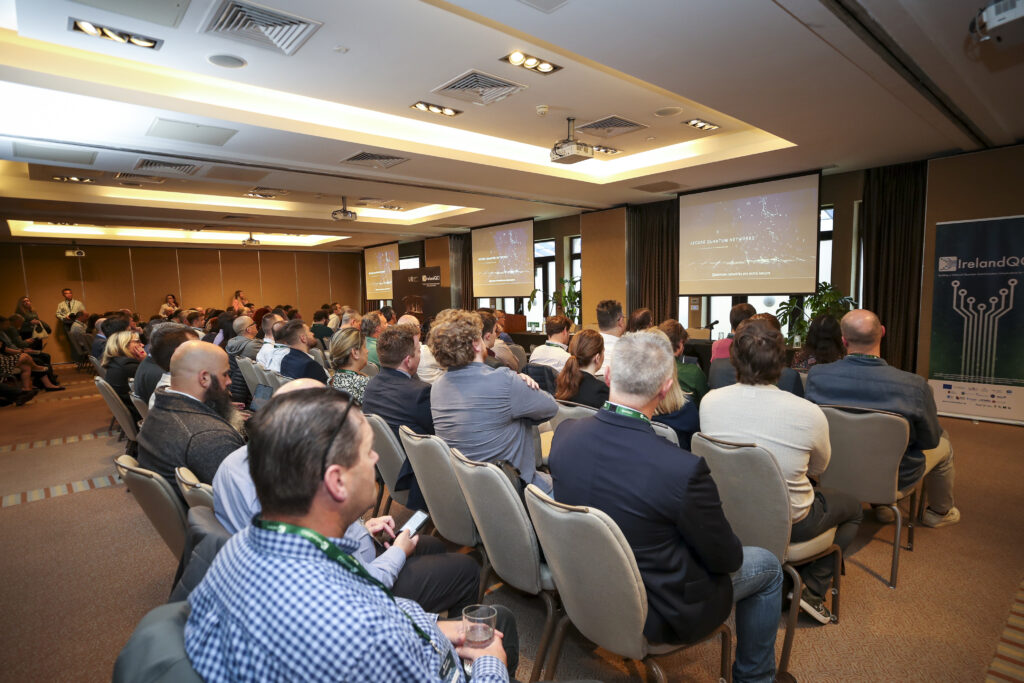
This week’s QCI Ireland event in Dublin spans 3 days of industry and academic stakeholder engagement, workshops, training and technology specialist addresses from representatives of the European Commission’s PETRUS network – the organisation coordinating the deployment of EuroQCI – and will see over 150 attendees each day.
Opening remarks today were delivered by John Regan, Managing Director of ESB Telecoms, who then introduced Ossian Smyth T.D. who commented on the importance of the IrelandQCI project and Ireland’s fantastic collaborative efforts with the EU and wider EuroQCI territories. Minister Smyth said, ‘I’m delighted that the Department of the Environment, Climate and Communications is co-funding the IrelandQCI project with the European Commission. With the creation of secure communication network, this project represents a major step forward in our ability to protect and encrypt communications. Working collaboratively with European partners through the EuroQCI initiative is a key pillar of the project and I’m glad to see members of other European QCI projects in attendance. I’d like to commend the Walton Institute for organising today’s event which has brought together a wide range of stakeholders from across many different industries. Today’s event will benefit both the IrelandQCI project and stakeholders in attendance through collaboration and knowledge-sharing’.
Minister of State at the Department of the Environment, Climate and Communications, with special responsibility for Communications and Circular Economy, Ossian Smyth T. D. was delighted to address attendees.
Waterford’s Walton Institute in SETU is leading the €10 million IrelandQCI project, on behalf of SFI CONNECT. Several national universities and research centres make up the consortium of partners involved in the project, including quantum technology experts from Trinity College Dublin, UCC’s Tyndall National Institute, UCD, Maynooth University and the Irish Centre for High End Computing at University of Galway, and industry partners HEAnet and ESB Telecoms. These academic and industry specialists are pooling their expertise and resources to achieve success in adding an extra security layer to Ireland’s communications infrastructure and the data it transmits.
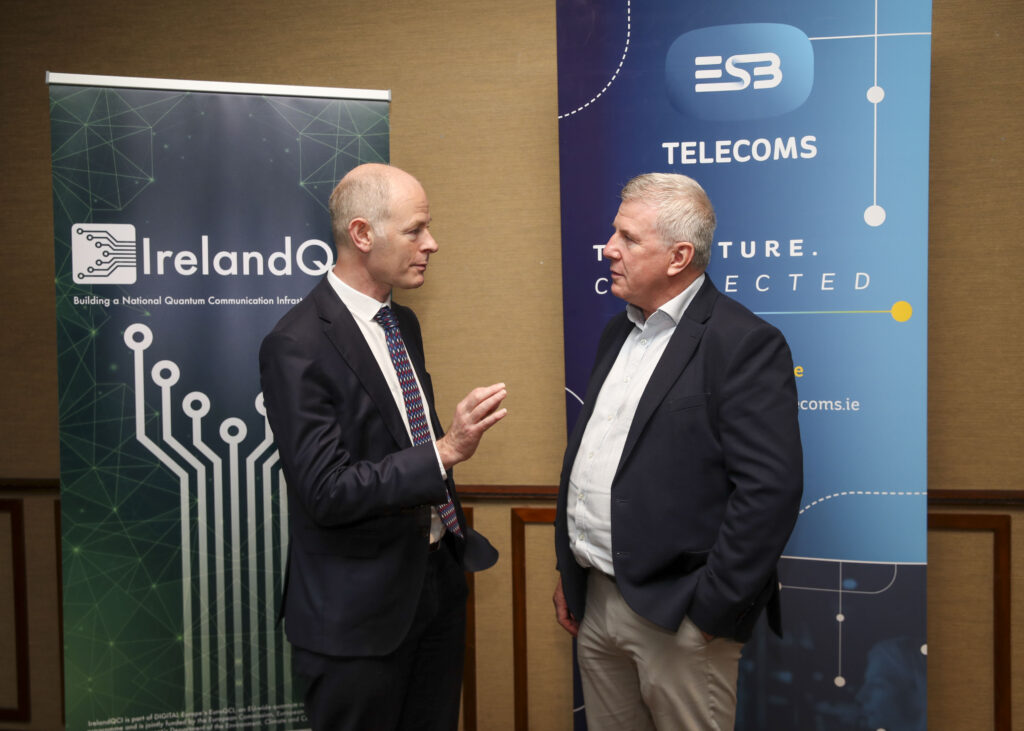
Pictured are Minister of State at the Department of the Environment , Climate and Communications with special responsibility for communications and circular economy, Ossian Smyth T.D. and John Regan, Managing Director ESB Telecoms.
Project Lead and Director of Research at Walton Institute, Dr Deirdre Kilbane, commented: “This event is an excellent coming-together of the quantum communication community not only from across Ireland but across Europe, gathering here in Dublin for knowledge-sharing. There are sectors represented here today spanning not only STEM industries but also health, security, education, finance, telecommunications and more. IrelandQCI will create a secure communication infrastructure that will benefit not only government, industry, and academia, but wider Irish society. At Walton Institute, we are very proud to lead this event, and we are delighted with the success of this week’s QCI Ireland event in bringing so many of our stakeholders together. We are glad to welcome our European colleagues to Dublin and to hear the success stories from other EuroQCI territories.”
HEAnet and ESB Telecoms are key partners in the project, as the quantum communications network is being built across the dark fibre optic network of ESB Telecoms parallel to the existing HEAnet backbone between Dublin, Waterford and Cork.
Managing Director of ESB Telecoms, John Regan, commented: ‘’ESB Telecoms, in its pioneering role in the Ireland QCI consortium, is committed to shaping Ireland’s quantum future. We take immense pride in providing the vital fibre optic backbone for the project. Quantum technology will ensure the security of our digital infrastructure well into the future. This conference is a testament to the unwavering dedication of Ireland QCI, the European Commission, the European Space Agency and our consortium partners in this crucial project.”
Overseas EuroQCI attendees at the event include representatives from the UK, Portugal, Spain, Germany, Cyprus and Greek quantum communication infrastructure projects.
Project Director at Deutsche Telekom PETRUS and Nostradamus Progammes at the European Commission, Keith Elder, commented: ‘’Petrus, as the Coordination and Support Action (CSA) for the national deployment projects funded under the Digital Europe Program for EuroQCI, along with the consortium partners Deutsche Telekom, Austrian Institute of Technology (AIT), Thales SIX and Airbus, is pleased to be able to participate in this important event, giving Petrus the opportunity to work closely with various stakeholders involved in EuroQCI from different Member States, QCI projects, academia, and manufacturers. This will allow Petrus and the participants to exchange ideas based on the experience gained in the various projects to build on the foundations already laid for EuroQCI and to extend the roadmap to a full deployment. There are a large number of activities in the field, and with the support of the European Commission, projects are advancing the knowledge, the technology and the understanding of the end user benefits of QKD services. Bringing all this experience together in Ireland is a great opportunity for the community to share their experience and knowledge.’’
Quantum technology specialists from across Europe are gathering at the Camden Court Hotel in Dublin city this week for a 3-day conference organised by the IrelandQCI Project Leads at Walton Institute in South East Technological University (SETU).
Industry experts across the agenda include speakers from Toshiba, BT, ID Quantique, Mbryonics, BME, QT Labs and Quantum Industries. Key local representatives include attendees from Government Networks, Science Foundation Ireland (SFI), IDA Ireland, Enterprise Ireland, ComReg, INEX, IBM, Airbus, ESB Networks and more. The agenda includes quantum flagship, vendor and use case workshops, community cooperation and sustainability plans, international deployments, and various insightful panel discussions.
This mode enables people with epilepsy to use the website safely by eliminating the risk of seizures that result from flashing or blinking animations and risky color combinations.
Visually Impaired Mode
Improves website's visuals
This mode adjusts the website for the convenience of users with visual impairments such as Degrading Eyesight, Tunnel Vision, Cataract, Glaucoma, and others.
Cognitive Disability Mode
Helps to focus on specific content
This mode provides different assistive options to help users with cognitive impairments such as Dyslexia, Autism, CVA, and others, to focus on the essential elements of the website more easily.
ADHD Friendly Mode
Reduces distractions and improve focus
This mode helps users with ADHD and Neurodevelopmental disorders to read, browse, and focus on the main website elements more easily while significantly reducing distractions.
Blindness Mode
Allows using the site with your screen-reader
This mode configures the website to be compatible with screen-readers such as JAWS, NVDA, VoiceOver, and TalkBack. A screen-reader is software for blind users that is installed on a computer and smartphone, and websites must be compatible with it.
Online Dictionary
Readable Experience
Content Scaling
Default
Text Magnifier
Readable Font
Dyslexia Friendly
Highlight Titles
Highlight Links
Font Sizing
Default
Line Height
Default
Letter Spacing
Default
Left Aligned
Center Aligned
Right Aligned
Visually Pleasing Experience
Dark Contrast
Light Contrast
Monochrome
High Contrast
High Saturation
Low Saturation
Adjust Text Colors
Adjust Title Colors
Adjust Background Colors
Easy Orientation
Mute Sounds
Hide Images
Hide Emoji
Reading Guide
Stop Animations
Reading Mask
Highlight Hover
Highlight Focus
Big Dark Cursor
Big Light Cursor
Cognitive Reading
Virtual Keyboard
Navigation Keys
Voice Navigation
Accessibility Statement
irelandqci.ie
October 23, 2026
Compliance status
We firmly believe that the internet should be available and accessible to anyone, and are committed to providing a website that is accessible to the widest possible audience,
regardless of circumstance and ability.
To fulfill this, we aim to adhere as strictly as possible to the World Wide Web Consortium’s (W3C) Web Content Accessibility Guidelines 2.1 (WCAG 2.1) at the AA level.
These guidelines explain how to make web content accessible to people with a wide array of disabilities. Complying with those guidelines helps us ensure that the website is accessible
to all people: blind people, people with motor impairments, visual impairment, cognitive disabilities, and more.
This website utilizes various technologies that are meant to make it as accessible as possible at all times. We utilize an accessibility interface that allows persons with specific
disabilities to adjust the website’s UI (user interface) and design it to their personal needs.
Additionally, the website utilizes an AI-based application that runs in the background and optimizes its accessibility level constantly. This application remediates the website’s HTML,
adapts Its functionality and behavior for screen-readers used by the blind users, and for keyboard functions used by individuals with motor impairments.
If you’ve found a malfunction or have ideas for improvement, we’ll be happy to hear from you. You can reach out to the website’s operators by using the following email
Screen-reader and keyboard navigation
Our website implements the ARIA attributes (Accessible Rich Internet Applications) technique, alongside various different behavioral changes, to ensure blind users visiting with
screen-readers are able to read, comprehend, and enjoy the website’s functions. As soon as a user with a screen-reader enters your site, they immediately receive
a prompt to enter the Screen-Reader Profile so they can browse and operate your site effectively. Here’s how our website covers some of the most important screen-reader requirements,
alongside console screenshots of code examples:
Screen-reader optimization: we run a background process that learns the website’s components from top to bottom, to ensure ongoing compliance even when updating the website.
In this process, we provide screen-readers with meaningful data using the ARIA set of attributes. For example, we provide accurate form labels;
descriptions for actionable icons (social media icons, search icons, cart icons, etc.); validation guidance for form inputs; element roles such as buttons, menus, modal dialogues (popups),
and others. Additionally, the background process scans all the website’s images and provides an accurate and meaningful image-object-recognition-based description as an ALT (alternate text) tag
for images that are not described. It will also extract texts that are embedded within the image, using an OCR (optical character recognition) technology.
To turn on screen-reader adjustments at any time, users need only to press the Alt+1 keyboard combination. Screen-reader users also get automatic announcements to turn the Screen-reader mode on
as soon as they enter the website.
These adjustments are compatible with all popular screen readers, including JAWS and NVDA.
Keyboard navigation optimization: The background process also adjusts the website’s HTML, and adds various behaviors using JavaScript code to make the website operable by the keyboard. This includes the ability to navigate the website using the Tab and Shift+Tab keys, operate dropdowns with the arrow keys, close them with Esc, trigger buttons and links using the Enter key, navigate between radio and checkbox elements using the arrow keys, and fill them in with the Spacebar or Enter key.Additionally, keyboard users will find quick-navigation and content-skip menus, available at any time by clicking Alt+1, or as the first elements of the site while navigating with the keyboard. The background process also handles triggered popups by moving the keyboard focus towards them as soon as they appear, and not allow the focus drift outside it.
Users can also use shortcuts such as “M” (menus), “H” (headings), “F” (forms), “B” (buttons), and “G” (graphics) to jump to specific elements.
Disability profiles supported in our website
Epilepsy Safe Mode: this profile enables people with epilepsy to use the website safely by eliminating the risk of seizures that result from flashing or blinking animations and risky color combinations.
Visually Impaired Mode: this mode adjusts the website for the convenience of users with visual impairments such as Degrading Eyesight, Tunnel Vision, Cataract, Glaucoma, and others.
Cognitive Disability Mode: this mode provides different assistive options to help users with cognitive impairments such as Dyslexia, Autism, CVA, and others, to focus on the essential elements of the website more easily.
ADHD Friendly Mode: this mode helps users with ADHD and Neurodevelopmental disorders to read, browse, and focus on the main website elements more easily while significantly reducing distractions.
Blindness Mode: this mode configures the website to be compatible with screen-readers such as JAWS, NVDA, VoiceOver, and TalkBack. A screen-reader is software for blind users that is installed on a computer and smartphone, and websites must be compatible with it.
Keyboard Navigation Profile (Motor-Impaired): this profile enables motor-impaired persons to operate the website using the keyboard Tab, Shift+Tab, and the Enter keys. Users can also use shortcuts such as “M” (menus), “H” (headings), “F” (forms), “B” (buttons), and “G” (graphics) to jump to specific elements.
Additional UI, design, and readability adjustments
Font adjustments – users, can increase and decrease its size, change its family (type), adjust the spacing, alignment, line height, and more.
Color adjustments – users can select various color contrast profiles such as light, dark, inverted, and monochrome. Additionally, users can swap color schemes of titles, texts, and backgrounds, with over seven different coloring options.
Animations – person with epilepsy can stop all running animations with the click of a button. Animations controlled by the interface include videos, GIFs, and CSS flashing transitions.
Content highlighting – users can choose to emphasize important elements such as links and titles. They can also choose to highlight focused or hovered elements only.
Audio muting – users with hearing devices may experience headaches or other issues due to automatic audio playing. This option lets users mute the entire website instantly.
Cognitive disorders – we utilize a search engine that is linked to Wikipedia and Wiktionary, allowing people with cognitive disorders to decipher meanings of phrases, initials, slang, and others.
Additional functions – we provide users the option to change cursor color and size, use a printing mode, enable a virtual keyboard, and many other functions.
Browser and assistive technology compatibility
We aim to support the widest array of browsers and assistive technologies as possible, so our users can choose the best fitting tools for them, with as few limitations as possible. Therefore, we have worked very hard to be able to support all major systems that comprise over 95% of the user market share including Google Chrome, Mozilla Firefox, Apple Safari, Opera and Microsoft Edge, JAWS and NVDA (screen readers).
Notes, comments, and feedback
Despite our very best efforts to allow anybody to adjust the website to their needs. There may still be pages or sections that are not fully accessible, are in the process of becoming accessible, or are lacking an adequate technological solution to make them accessible. Still, we are continually improving our accessibility, adding, updating and improving its options and features, and developing and adopting new technologies. All this is meant to reach the optimal level of accessibility, following technological advancements. For any assistance, please reach out to